Christmas 2024

Have you ever thought about the title for Jesus, ‘Emmanuel’? Really thought about it? You probably know it means ‘God with us’. Every Advent and Christmas we hear that title used – because it is always true. God with us in the human form of Jesus during his earthly existence and God with us always.

There is a version of Christian faith that says that God is in heaven but not on Earth. Thus Christmas is a reminder that God was with us – but isn’t anymore. This is an impoverished and incorrect notion.

If we return to our fundamentals, we believe that God is love (1 John 4:8). So God is present in every form of love in the world, sustaining us, as we sustain each other, through love. Likewise, we believe in God as Trinity – a mutual indwelling of love of the Father, Son and Spirit. Thus God is relationship. We are told we are made in the image of God (Gen 1:26). This explains why we need relationships to be happy and whole. So we are constantly in God and God is constantly with us. Then there is the mind-blowing idea that God is present in everything, all creation, lovingly bringing it all to fullness.

There may be times when God feels far away. That is our perception. It is like pulling the blinds down on a sunny day – the sun is still present. Thus Christmas is a reminder that God is always present. With all that is going on in the world, could there be a more timely Christmas gift – that God is with us?

God with us

Sun streaming

Cloudless blue sky

Gentle breeze

Feeling buoyed

Dog paddles at the beach

Back and forth

Tail wagging furiously

Fishing?

Neighbour’s quiet smile

Hugging a family member

Wind buffeting windows and fences

Rain hammering against the roof

Beauty of crystals

Wonder of rocks

with their ancient story

Cockatoo’s screeching heralds their presence

Music evoking joy, inspiration and connection

Family and friends connecting across the planet

An ant crossing the path

A night sky revealing a glimpse

of an infinite universe beyond us

The antics and love of a pet

Cuddling your spouse

Trees and shrubs sculpted

by prevailing winds

Friends capturing a moment 

through a photo

Flowers in their varied glory

and simple perfection

A sun powering everything

The list goes on and on

Love

God

Everywhere

In everything

With us

Always 
Educating for the Lived Gospel #148

I will give thanks to the Lord with my whole heart;
I will tell of all your wonderful deeds. (Ps 9:1)

We live in a time when it is easy to fool ourselves into thinking that we have ultimate control over lives. By acknowledging that all we are and all we have is gift from God, we put matters into their proper persecutive. It also allows us to cultivate an attitude of graitude – giving thanks for the goodness in our lives to the source of all good, God.

Thus, we have a two-fold task with the young people in our care. Firstly, we need to demonstrate that we are people who are thankful to God – in word and action. Given the normal ups and downs of life, we should be people who shine ‘good news’. Secondly, we need to give our young people opportunities to reflect upon the reasons that they have to be thankful. Service activities and/or immersion programs can bring such a message home quite strongly without us having to preach.

Have a great week!
Patrick

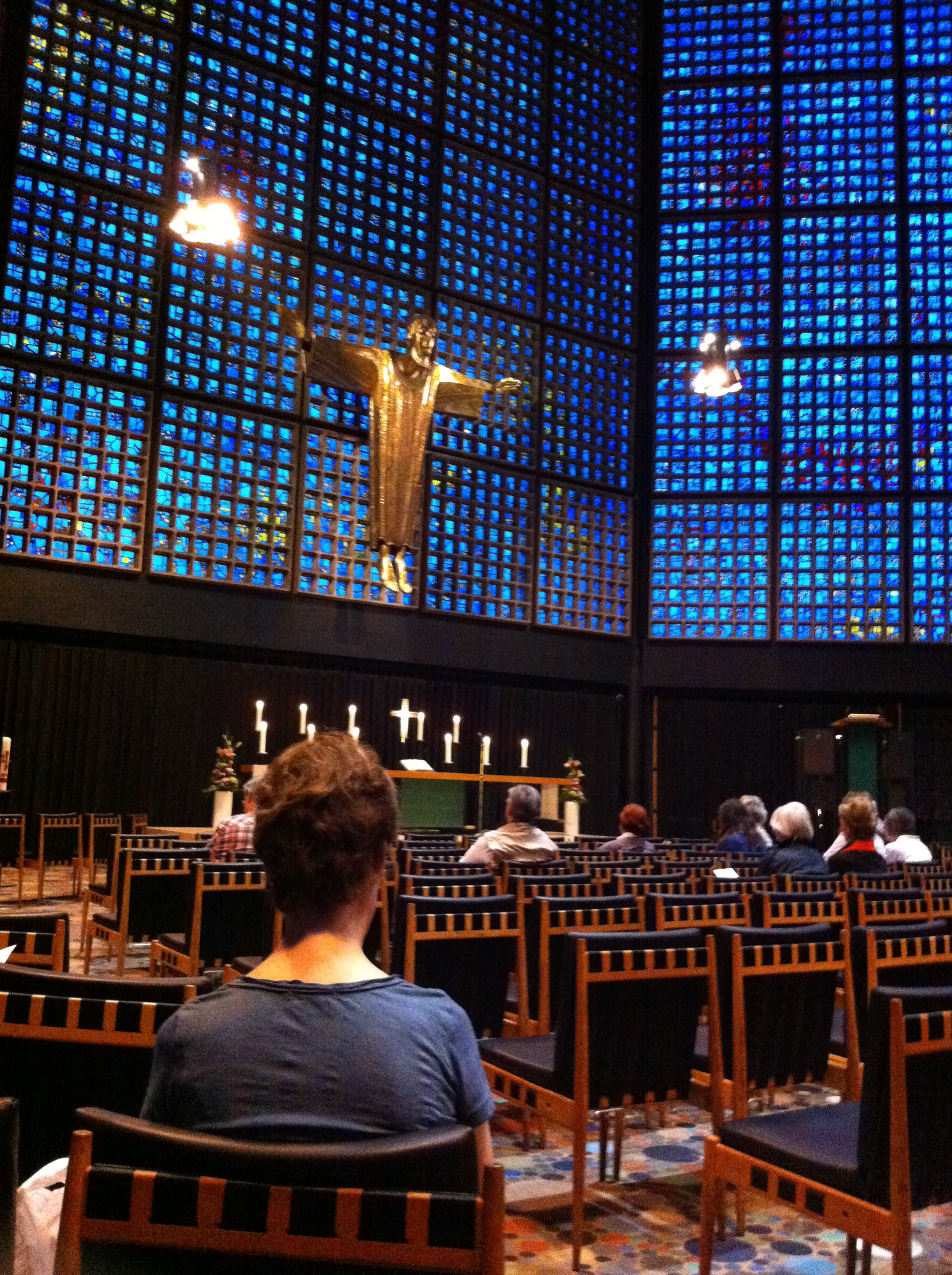
Organ vespers in Berlin

A long way from home

I felt at home

During organ vespers

In the Kaiser Wilhelm Memorial Church


It was a sense of grandeur

As the organ music

Filled the church

It was a sense of beauty

As the blue stained glass

Filled our eyes

It was a sense of connection

As I shared this experience

with family members

It was a sense of faith

As the congregation shared this experience

Including praying the Our Father


All done for the greater glory of God

IMG_3188

Educating for the Lived Gospel #141

But Moses said to God, ‘If I come to the Israelites and say to them, “The God of your ancestors has sent me to you”, and they ask me, “What is his name?” what shall I say to them?’ God said to Moses, ‘I am who I am.’ (Exodus 3:14)

In Jewish culture and history, to know someone’s name is to put you on a similar level to them. You know them. This poses an ongoing question, ‘How can we know God?’ And yet, as humans, we require some sort of naming to be able to engage in dialogue, or just plain wonder, about our creator. Scripture provides us with hints and glimpses as to how God acts and interacts with humanity. We can focus on our heritage and we can long for a future, but this Scripture answers the question, ‘Where will we find God?’ The response is that God is in the present, in the ‘now’ of our lives.

We can long for the ‘sugar daddy’ God who will save us from all inconvenience, disappointment or pain. Maybe even save us from ourselves. Rather, God is to be found in the present – in our hopes and dreams, our pain and suffering – the real messiness of our lives. This is where we will recognise the joy that is the infallible sign of God’s presence. May we all have our eyes open!

Have a great week!

Patrick

Educating for the Lived Gospel #132

‘Cursed be anyone who deprives the alien, the orphan, and the widow of justice.’ (Deut 27:19)

It is a common misconception that the God of the Old Testament is ‘different’ from the New Testament. The Gospel thrust toward justice which is well known to Christians has its roots in this most fundamental of Jewish Scriptures, the Torah (the name given to the first five books of the Old Testament). We give our governments the responsibility to take care of those in need. Because they are human institutions, governments will always make mistakes. However, some current governments are falling well short of the mark outlined in this text and many others like in the Bible. As adults we have responsibility, thus we need to ponder: ‘Is the government representing my wishes?’

Young people can have a passion for justice. It is vital that they are taught about the justice in the Scriptures and its moral claim on our behaviour. We also should ensure that they recognise the continuity between the Old and New Testaments. It is appropriate that schools continue to provide opportunities for young people to act for justice, especially for those ‘on the outer’ of society.

Have a great week!
Patrick

Educating for the Lived Gospel #118

Before I begin this final reflection for 2013, I must honour the passing of Nelson Mandela. I cannot be sad – at 95, he had to go sometime! Mostly I am grateful for and inspired by his life. Would that we followed his lead! An extraordinary example of doing the utmost with your God-given gifts.
 

‘Look, the virgin shall conceive and bear a son,
and they shall name him Emmanuel’,
which means, ‘God is with us.’ (Matt 1:23)

Matthew’s telling of the Christmas story has different emphases. The extraordinary fact of the virgin birth is explained by the child’s divine nature. Yet not in a way that sets him apart. God is with us. This is a God longing to be in relationship with each of us. Do we have the eyes to see God’s daily revelation? Or are we too caught up in doing? Do we long to be in relationship with God? Many of us know the truth behind Augustine’s words: “Our hearts are restless until they rest in you’.
Do our young people know, feel, believe that God is with them? Where and how do they find rest? The lives of young people are busy in ways ours weren’t at the same age. Young and old can be busy and distracted at Christmas. We would do well to rest in the knowledge that God is with us. How do we celebrate God with us at Christmas?
Have a blessed Christmas and a great break!
Patrick


Educating for the Lived Gospel #115

So God created humankind in his image,
in the image of God he created them;
male and female he created them. (Gen 1:27)

 
Firstly, we say that, as humans, we are made in God’s image. Surely, amongst many other things, this verse attests to the basic goodness of each person. For each of us this attests, despite our feelings on any given day, that “I am created in God’s image’. The verse also speaks of how men and women are created in God’s image. Women and men have not, nor never will be, the same. But the power and import of this ancient passage seems to have ‘lost out’ for many centuries in any battle against cultural forces. As people of faith, we need to affirm the goodness and dignity of each person.
 
Our task is to ensure that young people hear the message that each of them are good and that we continue to affirm that message by our dealings with them.
 
Have a great week!
Patrick

Educating for the Lived Gospel #113

He said, ‘Go out and stand on the mountain before the Lord, for the Lord is about to pass by.’ Now there was a great wind, so strong that it was splitting mountains and breaking rocks in pieces before the Lord, but the Lord was not in the wind; and after the wind an earthquake, but the Lord was not in the earthquake; after the earthquake a fire, but the Lord was not in the fire; and after the fire a sound of sheer silence. When Elijah heard it, he wrapped his face in his mantle and went out and stood at the entrance of the cave. (1 Kings 19:11-13)

As humans, we can be impressed by the grand, the huge – by ‘bells and whistles’. One of the reasons that I am moved by this passage is that it reminds me that I need to be alert to God at unexpected times and places. It also encourages me to make the time to hear the silence or what is also translated as a ‘still, small voice’. This could be easily drowned out by the busyness of life!
While we tell the young people in our care that community service is an opportunity to live their faith, it would not seem very ‘impressive’ to them. One of the beauties of the service opportunities we offer to young people is that it can allow them to see the ‘face of Jesus’ in those they serve and those with whom they serve. We need to give them a framework within which they can reflect upon their experience. The rest is up to God!
Have a great week!
Patrick

Educating for the Lived Gospel #108

Therefore I am content with weaknesses, insults, hardships, persecutions, and calamities for the sake of Christ; for whenever I am weak, then I am strong. (2 Cor 12:10)

Thus, whenever we rely on God in our time of weakness, we are granted the strength we need. Another aspect of this quote is that we build the body of Christ together, not alone. We each have our skills, abilities and gifts. It can be easy to get ‘carried away’ and get an inflated sense of ourselves. What difficulties can teach us, if we enough faith to be open to the lesson, is that when the going gets tough, we need to rely on God more. Our society values self-reliance – yet when we rely on God, extraordinary things can happen. The gifts and talents of others, which may not have been glimpsed, can come to the fore. By not focussing solely on our own abilities, we become more open to the Spirit’s promptings about others and ourselves.
In their journey towards maturity, self-reliance can seem attractive to young people. And it is not evil, but like many things in life, we need a balance. Young people experience their share of ‘weaknesses, insults, hardships, persecutions, and calamities’. By encouraging them towards prayer and sharing our stories of reliance on God, young people may find solace in their difficulties, as well as grow in faith.
Have a great week…and holiday (if you get one)!
Patrick

Educating for the Lived Gospel #105

Jesus said, ‘Truly I tell you, unless you change and become like children, you will never enter the kingdom of heaven. (Matt 18:3)

 
This quote flies in the face of our society which urges us to grow up and be responsible and productive members. How can we ‘become like children’? Children exude joy, love and acceptance. Children can be excited by seemingly small things – frequently by the wonders of nature. As Teilhard de Chardin said, ‘Joy is the infallible sign of the presence of God’. You know when you are loved by a child – there is no doubt, no holding back, as they wrap their arms around you. ‘God is love’ (1 John 4:8). Young people do not see the divisions created by adults – divisions of race or colour – ‘the Lord does not see as mortals see; they look on the outward appearance, but the Lord looks on the heart.’ (1 Sam 16:7)
It is our role to slow some young people down from their headlong rush to ‘grow up’. We need to remind them of the importance of joy, love and acceptance – encouraging them to hold on to those qualities – as well as doing our best to model them.
Have a great week!
Patrick