Christmas 2024

Have you ever thought about the title for Jesus, ‘Emmanuel’? Really thought about it? You probably know it means ‘God with us’. Every Advent and Christmas we hear that title used – because it is always true. God with us in the human form of Jesus during his earthly existence and God with us always.

There is a version of Christian faith that says that God is in heaven but not on Earth. Thus Christmas is a reminder that God was with us – but isn’t anymore. This is an impoverished and incorrect notion.

If we return to our fundamentals, we believe that God is love (1 John 4:8). So God is present in every form of love in the world, sustaining us, as we sustain each other, through love. Likewise, we believe in God as Trinity – a mutual indwelling of love of the Father, Son and Spirit. Thus God is relationship. We are told we are made in the image of God (Gen 1:26). This explains why we need relationships to be happy and whole. So we are constantly in God and God is constantly with us. Then there is the mind-blowing idea that God is present in everything, all creation, lovingly bringing it all to fullness.

There may be times when God feels far away. That is our perception. It is like pulling the blinds down on a sunny day – the sun is still present. Thus Christmas is a reminder that God is always present. With all that is going on in the world, could there be a more timely Christmas gift – that God is with us?

God with us

Sun streaming

Cloudless blue sky

Gentle breeze

Feeling buoyed

Dog paddles at the beach

Back and forth

Tail wagging furiously

Fishing?

Neighbour’s quiet smile

Hugging a family member

Wind buffeting windows and fences

Rain hammering against the roof

Beauty of crystals

Wonder of rocks

with their ancient story

Cockatoo’s screeching heralds their presence

Music evoking joy, inspiration and connection

Family and friends connecting across the planet

An ant crossing the path

A night sky revealing a glimpse

of an infinite universe beyond us

The antics and love of a pet

Cuddling your spouse

Trees and shrubs sculpted

by prevailing winds

Friends capturing a moment 

through a photo

Flowers in their varied glory

and simple perfection

A sun powering everything

The list goes on and on

Love

God

Everywhere

In everything

With us

Always 
Educating for the Lived Gospel #150

The Lord is my rock, my fortress, and my deliverer,
my God, my rock in whom I take refuge,
my shield, and the horn of my salvation, my stronghold. (Ps 18:2)

We each come to faith or have faith awakened in us by a variety of circumstances. It may be our family It may have been the school we attended. It may have been a chance meeting. However, coming to faith is different from continuing to believe or having our faith strengthened. Situations will arise that test our faith. That you are reading this means that something or someone helped you through. Getting through tough times through our faith invariably strengthens our faith. Thus the Scripture passage will ring true for you – as it does for me.

Our task is to help guide our young people towards faith. If when the time is right, we share our experience of faith helping us through the tough times, then we plant a seed, a possibility. The Holy Spirit will nurture that at the right time.

Have a great week!
Patrick

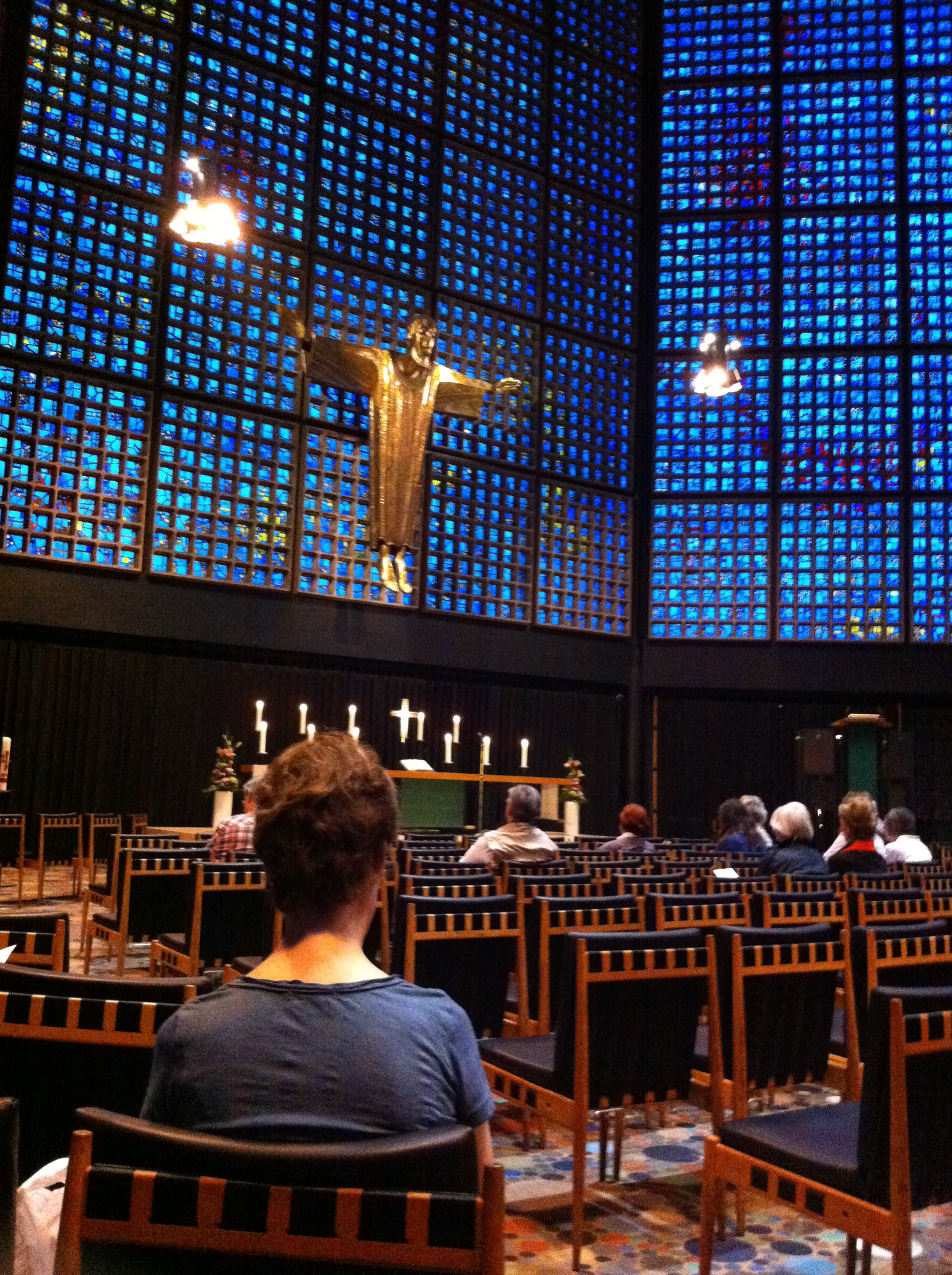
Organ vespers in Berlin

A long way from home

I felt at home

During organ vespers

In the Kaiser Wilhelm Memorial Church


It was a sense of grandeur

As the organ music

Filled the church

It was a sense of beauty

As the blue stained glass

Filled our eyes

It was a sense of connection

As I shared this experience

with family members

It was a sense of faith

As the congregation shared this experience

Including praying the Our Father


All done for the greater glory of God

IMG_3188

Educating for the Lived Gospel #140

Thomas answered Jesus, ‘My Lord and my God!’ (John 20:28)

Through the centuries, the term ‘doubting Thomas’ has not been used kindly. But who of us, put in the same situation, would believe that their dead friend had risen, without some doubt? I put it to you that more important than Thomas’ doubt is his faith. Saying ‘my Lord and my God’ is one of the fullest proclamations of faith in Jesus in John’s Gospel. And so we have affirmed again that doubt can be part of the faith journey.

The world that young people live in is not always conducive to faith. Access to so much information and so many competing faith stances and ideologies makes affirming one choice difficult. We cannot force the grace that is needed for faith. We can build relationships with the young, we can model our faith, and we can provide opportunities for prayer and worship. The rest is in God’s hands.

Have a great week!
Patrick

Educating for the Lived Gospel #138

But when Cephas came to Antioch, I opposed him to his face, because he stood self-condemned; for until certain people came from James, he used to eat with the Gentiles. But after they came, he drew back and kept himself separate for fear of the circumcision faction. And the other Jews joined him in this hypocrisy, so that even Barnabas was led astray by their hypocrisy. But when I saw that they were not acting consistently with the truth of the gospel, I said to Cephas before them all, ‘If you, though a Jew, live like a Gentile and not like a Jew, how can you compel the Gentiles to live like Jews?’ (Gal 2:11-14)

This text deals with a fundamental question that echoes through the centuries: how are we to live our faith? We shortly will celebrate the feast of Sts Peter and Paul. Both of these apostles had a conversion experience; both were well aware of their failings. It is interesting that the Church, in her wisdom, celebrates these apostles with divergent characters and styles on the one day. That Paul was prepared to criticise Peter is an example to all who would stand against authority.

Young people want to live authentically, live as people of integrity. Following rules unquestioningly has its limits. We must be open to the questions and challenges of young people. After all, God gave us a brain to use. Such questioning helps young people to grow in their own sense of faith. It is also good to show young people that questioning is part of Scripture and part of the faith journey.

Have a great week…and break!
Patrick

Educating for the Lived Gospel #130

When Mary Magdalene had said this, she turned round and saw Jesus standing there, but she did not know that it was Jesus. Jesus said to her, ‘Woman, why are you weeping? For whom are you looking?’ (John 20:14-15)

In each of the Gospels, women are the first to see Jesus after the resurrection. However, many who see Jesus do not recognise him at first. Possibly, this is a combination of Jesus looking different after the resurrection and the disciples being overcome by their grief, thinking that Jesus was gone. At the start of the Gospel (1:38), Jesus asks ‘What are you looking for?’. The Gospel is brought to its finish with the who of Jesus as the focus.

Young people are searching for life’s answers. Sometimes their answer, like Mary Magdalene, may be staring them in the face without them seeing. I know I’ve been there! Part of the answer for young people lies inward – the goodness placed there by God and developing that so that they can live ‘life to the full’. Another part of the answer lies in embracing their companions on life’s journey, revelling in their shared humanity.

Have a great week!
Patrick

Educating for the Lived Gospel #129

Jesus said to him, ‘Have you believed because you have seen me? Blessed are those who have not seen and yet have come to believe.’ (John 20:29)

Living our Easter faith is not always easy, as the early Christians found. Many of us will have had our ‘doubting Thomas’ moments! So, how do we deal with such doubting moments? Do we engage in negative self-talk OR should we, rather, see doubt as part of the journey of faith, a gradual unfolding? Maybe it is a matter of an ‘on balance’ judgment. ‘On balance’ do we mostly believe and have small amounts of doubt?

Our Catholic schools, our Catholic communities, have a very different shape to the past. It is my contention that it is easier to believe when you are immersed in a believing community. This is not the case for a significant number of the young people in our care. As educators, we can assure young people that doubt is part of the faith journey. Being aware of the cultural forces at work, we must also be intentional in our efforts to promote Catholic identity – providing young people with as much of the breadth of our tradition as we can. And leave the rest up to God.

Have a great week…and term!
Patrick

Easter 2014

As Easter arrives, we turn again to put words on our faith. We try to deepen our understanding of how it shapes our daily lives. Many families struggle through difficult times. One family I know have endured their own passion and crucifixion for the last 18 months, watching their daughter be ravaged by cancer and eventually die, aged 18. Through their pain, they clung to the goodness and beauty that shone from her – her courage, selflessness and love. Amidst their pain and tears, they also glimpsed goodness in each other. A faith that matters offers no easy salve for this family’s grief. But it offers a hope that pain, suffering and even death do not have the last word. Her courage, selflessness and love are an ongoing inspiration to them – and the broader circle of family and friends, to do likewise. As Paul said, “And now faith, hope, and love abide, these three; and the greatest of these is love.” (1 Cor 13:13) This Easter may we each make the most of our gift of life – spreading goodness, beauty and love – today and every day.