The beat

Driven by the wind,

waves pound the shore

like clockwork.

Seabirds

wheel, swoop, and glide.

Rocky outcrop

site of water fountains

surging into the air.

The sun and clouds 

collaborate to create

a glow

that highlights

the glory on display.

This wonder, this grace

isn’t for me,  

it is for itself.

The grace of life

What is my response?

Appreciation and wonder?

Apathy?

Or some kind of valuation?

Gone?

Death is sudden,

final,

yet my apprehension

or understanding

of my mother’s passing

seems to unfold

over time.

It has the look of a blow

but maybe

her death

is unfolding

as mysteries do.

My finite mind 

can only grasp

so much.

I have held sorrow and loss

at bay

‘She was in pain’

‘It was time’

True

but not complete statements.

As another formal step

is done

I have returned to loss

yet I also realise

it is a step forward.

Where to?

A life where my mother

is a memory (or a thousand!)

I cherish and embrace all that was good

in her

and let go or forgive

her shortcomings,

as I hope others will forgive mine

in my turn.

Death unfolds…like a flower?

Christmas 2023

The whole world is a gift from God to us. That is the essence of the Incarnation that we celebrate at Christmas – not just people, but everything is ‘shot through’ with God.

As humans it is so easy to focus on ‘our own’. That expression, ‘our own’, can be drawn narrowly to refer to members of our family, maybe even favourite members of our family. The circle can widen to include those in our street, our suburb, our city, even our country. That we are each made in the image and likeness of God means that we are a child of God – and thus brothers and sisters to each other. This is a gift we constantly have but need to be reminded of; when better to be reminded than at Christmas?

’A child is born’ – this most human of images arouses great love and compassion. Yet God is already with us, always with us. God is present in each moment – a constant freshness, newness, surprise, wonder. The image of the new born baby jolts us out of complacency. What is more alive, more fresh than a new born baby? 

Seeing with the eyes of a child – with wonder and awe – is a particular joy at this time of year.  Everything around us is deserving of that wonder, just watch a child. It is easy for adults to become world-weary, ‘been there, done that’. Yet, with a child-like openness, the wonder floods in: leaves, rocks, sky, water, sun. All gifts from the God who loved us into life.

It is wonderful to give and receive gifts at Christmas – and it can be a tangible sign of love and affection. Even more powerfully, we are each a gift to others and ourselves. This Christmas may I truly be a gift to others in my life as well as gratefully and respectfully receive the gifts of others in my life. In so doing we each honour the giver of these person-gifts…God.

Home

Home is a concept

as much as a place.

Where do I belong?

Where can I be my true self?

Nothing and no one

is holding us back

from feeling

‘at home’

– other than ourselves.

A long time residence

develops a familiarity.

work done

to maintain or improve,

people and gatherings,

events

large or small,

joyous or sombre.

Children conceived

and raised,

games and laughter.

Sunrises and sunsets

Trees, flowers, birds

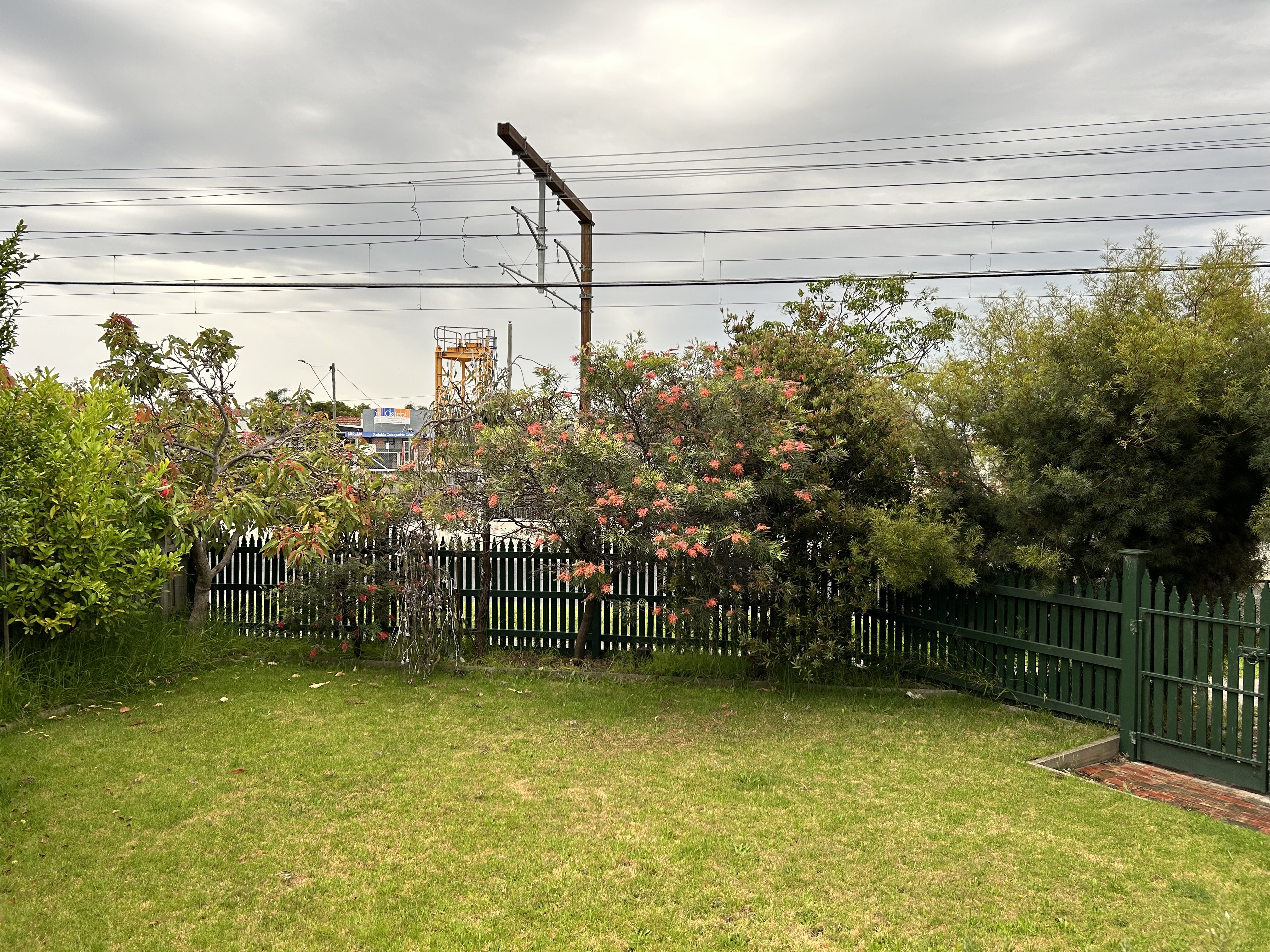
Lemons

Lawn

And, if you’re lucky

and work hard at it

Love

and buckets of it!

Everyday revelations

Waves surge to shore

loudly,

Grabbing my attention

assuring me

to ease my troubled mind.

Thanks to new arthritis medication

our older dog

runs on the beach,

lifting our hearts

and putting smiles

on our faces.

This scene is echoed

as other dogs

bound and dart

with unbridled joy.

The still of morning

bathed in the sun’s glow

the quiet only interrupted

by an insect’s buzz.

The pinks, blues and oranges

of sunset

framed by clouds

whose shapes and textures

combine

in peaceful, stunning beauty.

Cuddling my wife in bed

the physical warmth and comfort

make me feel

whole and at peace.

With grace and courage

a local woman

shares her cancer diagnosis.

At so many times

and in so many ways

we can become aware

of God-with-us.

The promise of this season

and always true.

Reflection Sunday 3 December

Mark 13:33-37

Advent helps us to prepare ourselves to be more aware of God’s continuing presence with us. Can we accept God’s self gift? We are aware of all that is wrong with the world: be it Israel and Palestine or Russia and Ukraine, those shunned and left on the outer for whatever reason. God is there, with them. We can’t always see it. Maybe we don’t want to. God is there where and when we least expect it. So, in a special way during Advent, we wait for this God of surprises – our eyes and our hearts open for those mentioned in last week’s Gospel: the hungry, the thirsty, the stranger, the naked, the ill, those in prison.

Advent is also marked by waiting which explains today’s Gospel exhorting us to be watchful and alert. Waiting…it’s not something that we do well these days. We expect things to be instant – spurred on by the Internet – powered by NBN or 5G. 5 seconds to load? Too long! Those of us old enough to remember ‘dial up’ would joke that ‘www’ meant ‘world wide wait’. The further back we go in time, the less ‘instant’ things were – the further back we go in time, the more waiting was considered normal. Advent is a reminder that God reveals Godself to us in God’s time – not ours. The waiting of Advent is also characterised as preparation. I am preparing myself to recognise God. I might recognise God in a sacrament. I might recognise God in nature. This might also happen by opening my heart to those in need. It might happen by being less concerned about my own pleasure or my own needs – and being more other-focused. Thus one way we recognise the God of love is by being more truly loving. 

Reflection Sunday 26 November

Matt 25:31-46

It is appropriate that this Gospel passage is the one used for this feast of Christ the King as it sets out the type of kingdom over which God rules. Yes, this is an end times judgement – but upon what are people being judged as ‘sheep from goats’? It is our actions or lack of action for those in need.

The passage specifies those in need: those who are hungry, thirsty, a stranger, naked, sick or in prison. Also, crucially, God is each of those people, e.g. ‘naked and you clothed me’. Lest that point be lost, it is made explicit: ‘Truly I tell you, just as you did it to one of the least of these who are members of my family, you did it to me’ (Matt 25:40). Saying that we are all one family is also thought-provoking (thus the Our Father). We can each be guilty of wanting to ‘be on our best behaviour’ whether that is how we act in front of our boss, in an interview, our manner of speech or the way we dress in chosen situations. Two questions this passage raises are: ‘how do I act when I think no-one is watching?’ ‘Am I really a person of compassion and respect or might it just be for show?’ 

We can easily be caught in making judgments of others, and ourselves. Passages like this can be seen to reinforce this view. However, God is not trying to catch us out for one mistake or omission. Rather, those who are found wanting are those who never take care of others who are hungry, thirsty, a stranger, naked, sick or in prison. 

May we have the grace and wit to see that this passage applies to each of us – as well as the governments who represent us – and ensure that we live our faith by caring for those in need.

Reflection Sunday 19 November

Matt 25: 14-30

This passage has an ‘end times’ feel to it, like all of chapter 25 in Matthew’s Gospel. Jesus is approaching Jerusalem and his death and resurrection. While the focus of the passage is money, it can be seen as a metaphor for our God-given talents. What do I do with my gifts? Do I keep them to myself? Do I use them to make a living? Do I use them to build community?

The parable is reminding us that our talents aren’t ours – they are from God – and they are meant to be used. Whether it is with two or three others or a larger group, when we each use our talents for the group there is a multiplier effect in action. My efforts mesh with the efforts of others and we achieve more as a whole. Importantly there is also the happiness or good will created by working together. There is a ‘community spirit’ or ‘good vibe’.

The key to this passage is grace – God’s unearned gift. In our society so focused on merit, on earning what we have, grace is not only scandalous, it is also unthinkable. That is why society refers to some people as ‘the undeserving poor’. Rather we must latch on to the truth of the Gospel that all that we are and all that we have is gift from a God who loves each one of us unconditionally. So, like God, everything we have is meant to be given away, freely, in love. 

(For more on this, read these reflections on grace from the Centre for Action and Contemplation.) 

I can do this some of the time with people I love. My challenge, if I am to more fully follow Jesus, is to steer away from thinking about myself or others being deserving and instead live a grace-filled love that is ‘pressed down, shaken together, running over’ (Luke 6:38).

Reflection Sunday 12 November

Matt 25:1-13

Am I ready for God? This passage is connected to ideas of ‘judgement’ or ‘end times’ which was a notion very popular in the 1st century, including amongst Christians. The ‘kingdom of heaven’ is associated with life after death. God is coming and we do not know the ‘day nor the hour’. During the 1st century, the world was expected to end very soon – so one had to be ready. We still believe that God will come but after 2000 years of waiting, we know we could wait a while longer. Obviously it is also important for each of us to be prepared for when we die – and the judgement  that we believe that comes at that time.

A different understanding of the ‘kingdom of heaven’ is the ‘reign of God’. What if we think that the reign of God could be made manifest, in part, now? Surely that is a community, a place that is guided by justice, love and compassion. Heaven knows we need that right here on Earth, right now. So a more immediate understanding of this passage might be to ask, am I acting in a way that can help God’s reign be present now? Do I care for those on the margins of society, on the margins of my life? Do I help those with no voice, to speak? Do I use my God-given gifts and talents to build community? Am I welcoming to strangers? Do I laugh at myself and my faults – there I go again? Do I appreciate the small wonders of every day – like waking up, the sun, sky clouds, trees, birds, plants, people – and am I sufficiently awake to realise that God is talking to me, guiding me through them?

May we each be ready with the wisdom and grace to greet every day as the miracle it can be if we truly open our eyes. In so doing, we will build peace.

Reflection Sunday 5 November

Matthew 23:1-12

With the responsibility of significant decisions and so much attention as a consequence, a challenge for a leader is to stay grounded, whether that leader is political or religious. ‘Do as I say, not as I do’ is not inspiring advice. If what I tell you is so great, so meaningful, what aren’t I following my own advice? That’s why another saying is ‘actions speak louder than words’. This mindset is all the more true when it comes to an individual expressing their faith. For my faith to be meaningful, my expressions of faith should match what I believe my faith to be. My faith in God should lead to worshipping God – not me. 

Is my faith about what others see me do? Is it about being showy? Faith should be lived (and thus the name of this blog) and an essential part of that faith is humility. The humble person is confident in their God-given gifts, they do not need to draw attention to themselves. Ideally, I should use my God-given gifts to build community.

An interesting point to note in this passage is that Jesus does not criticise the teaching of the scribes and Pharisees – but that they do not live their teaching. It is easy to judge and criticise but Jesus is asking us to be discerning. When I hear good teaching, it is my job to live it out; not ignore good teaching because it is poorly lived. Another facet of this passage is that I shouldn’t judge – I should be aware of the plank in my own eye, acknowledging the challenge of living my faith every day.